

You’ve set a date, booked your venue, and finalized the guest list. But before you can send out your invitations, you need to make one more decision: your wedding dress code.
While it might seem trivial or unnecessary, “What should I wear?” is one of the most common wedding guest questions. By establishing a dress code and communicating it ahead of time, you can help eliminate confusion and set the tone for your big day.
Types of Wedding Dress Codes
Wedding dress codes are notoriously confusing. What’s the difference between formal and semi-formal? What’s appropriate for a black tie wedding?
Here is a quick breakdown of common wedding dress codes:
- White tie: floor-length gowns and heels for women, tuxedos with tails for men.
- Black tie: floor-length gowns or elegant pantsuits for women, tuxedos for men.
- Formal / Black-tie optional: floor-length gowns or elegant cocktail dresses for women, tuxedos or formal suits for men.
- Cocktail: midi-length dresses for women and suits and ties for men.
- Semi-formal: knee-length dresses or playful pantsuits for women, dress shirts and ties for men.
- Festive: patterns and sequins and colors, oh my!
- Concept: themed attire like garden party chic, western runway, or Hollywood glamour.
- Monochrome: solid color outfits for everyone.

Formal or black tie optional dress codes are the most common. This makes sense as formal venues are the most popular to rent, according to our recent research. Experiential venues are rising in popularity — up 4% from 2025 — leading us to wonder if conceptual dress codes will follow a similar trend.
Pros of a Wedding Dress Code
It’s not often that you get to tell people what to wear. If it feels strange to assign a dress code to your parents or soon-to-be in-laws, know that it’s considered proper etiquette.
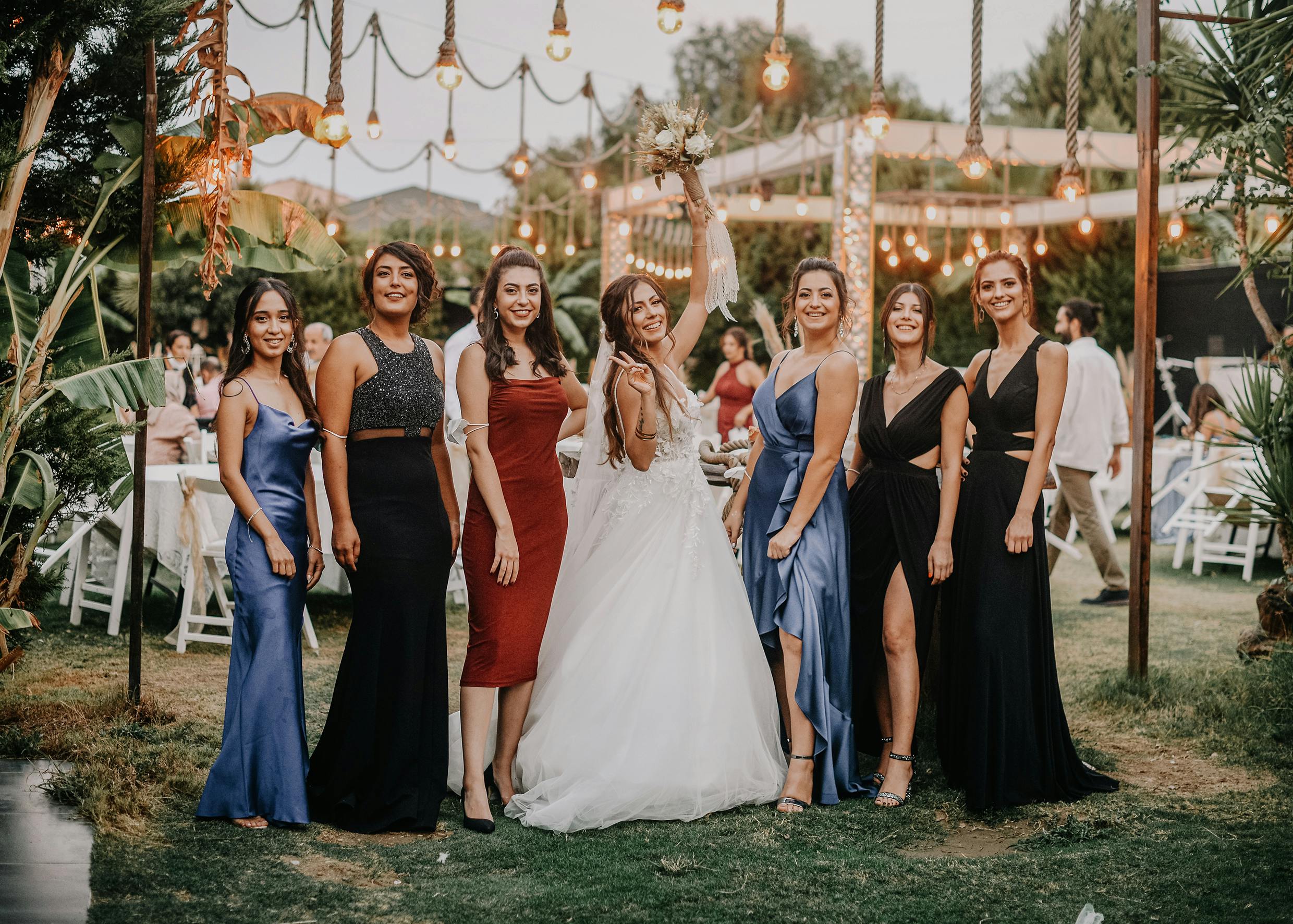
No one wants to show up underdressed for a party. A dress code can help your guests feel confident that they are dressed appropriately for the event. It also helps set the tone for your big day. Black tie, for example, signals that your wedding will be a sophisticated evening, while cocktail attire suggests the event may be a casual outdoor affair.
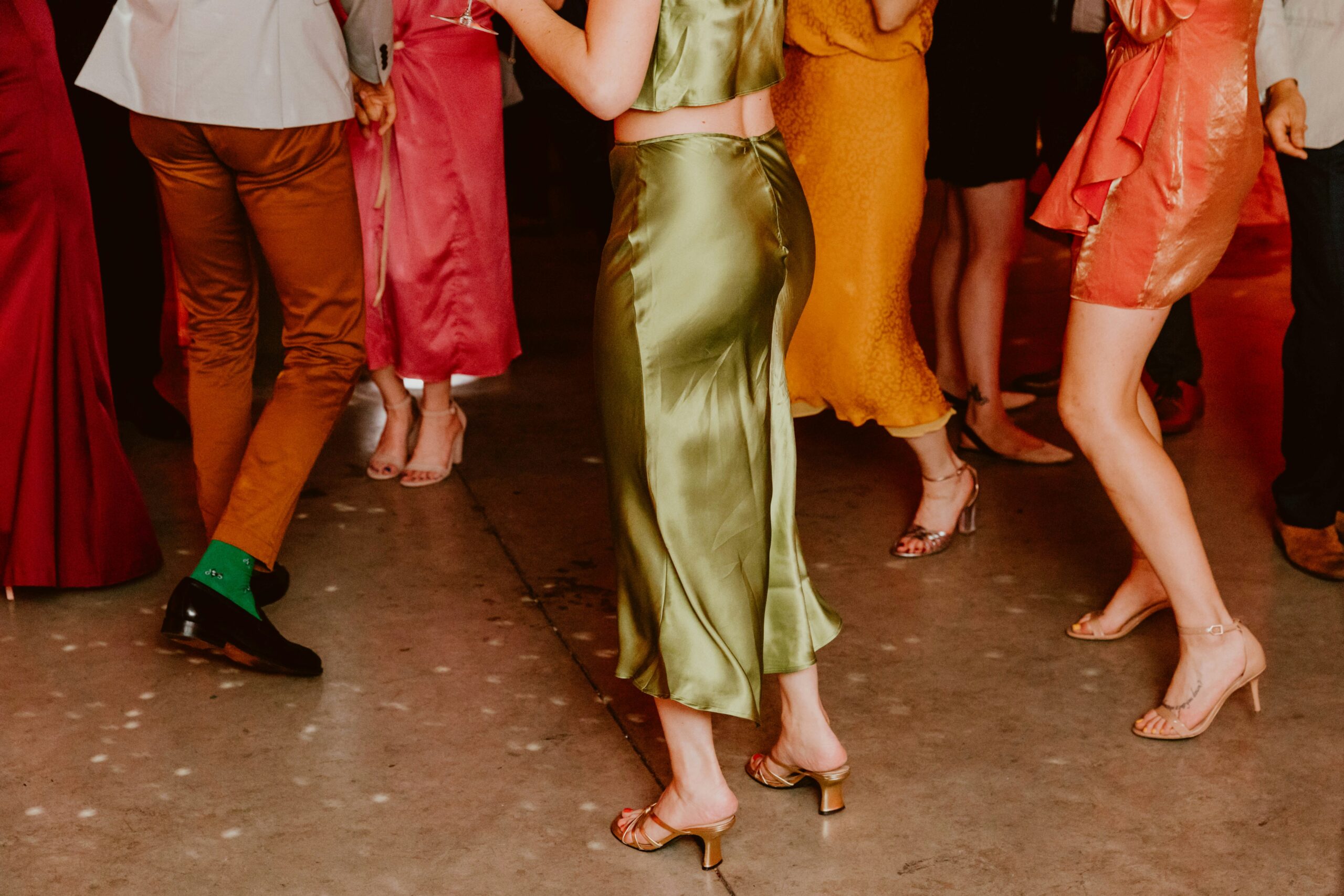
If you have a wedding theme, your dress code can serve as an extension of that theme. You’ve spent countless hours choosing your wedding colors, decor, and thoughtful details — invite guests to participate by dressing the part!
Lastly, a dress code helps create continuity for your wedding pictures. If some guests are in jeans and some are in tuxedos, your photos will look like a Where’s Waldo picture book. But if everyone follows the dress code, it’ll look like everyone showed up to the same event.
Cons of a Wedding Dress Code
On the other hand, a wedding dress code can create confusion or even insecurity among your guests.
Some guests may not understand the specifics of your dress code and get anxious about finding the perfect outfit. Expect to field some questions — especially if you choose a non-traditional dress code like festive or concept! Be sure to include dress code details and inspiration pictures on your wedding website to help reduce confusion.
If a new outfit is required, especially for a white or black-tie wedding, guests may feel financially insecure or frustrated about having to buy something new. Your more fashion-obsessed guests may also feel limited by a dress code and be tempted to rebel with their personal style.
How to Choose Your Wedding Dress Code
Once you’ve weighed the pros and cons, it’s time to determine your wedding dress code. Keep these tips in mind to choose the right style suggestions for your big day.
- Consider the location. Will you be primarily outdoors or indoors? Will guests be walking on sand or grass?
- Consider the time of day. Are you hosting a brunch wedding or an evening event?
- Consider the day of the week. Are you getting married on a weekday or a weekend?
- Consider the vibe. How do you want your wedding to feel?
Choose a dress code that feels practical for the season and venue — but don’t forget to have some fun with it.
Rachel Kauffman is a Detroit-based content writer, bookworm, and cat mom to two feisty felines.