

Creating an invitation sounds simple. Add the details, hit send, and move on. But if you’ve ever hosted anything, you know how quickly things fall apart. People forget to RSVP, show up at the wrong time, or text you questions that were technically already answered.
A good invitation keeps all of that from happening. Here’s how to make sure yours actually does.
What Every Invitation Needs (and What People Still Forget)
At the very least, your invitation should cover the basics. Clear, succinct, and easy to read.
Start with the purpose of the event. “Party” is vague. Details like “30th Birthday Party,” “Holiday Cocktail Party,” or “Engagement Celebration” give your guests context right away and help them understand the tone.
From there, your invite should include the following details:
- Date
- Format: [Day of the Week], [Month] [Day], [Year]
- Time
- Be clear about what that time window actually means.
- Arrival time? Party start time? Cocktail hour and then dinner? Is it an open house? Make sure you’re being specific (if you need to be).
- Location
- Name and address of venue, plus anything helpful like parking information or which entrance to use (if there are multiple).
- RSVP Details
- How and by when
- Host Name
- Make sure you let people know who is hosting the function, so there is no confusion about being invited to some random party.
It also helps to remove any ambiguity. If plus-ones are limited, say so. If space is tight, communicate that early.
It sounds obvious, but the invite is often where things go wrong. Leaving details out or making them difficult to find can cause a big headache for everyone.

When to Send Your Invitations
Timing is one of the most overlooked parts of the invitation process. And it matters more than people think. If you send your invitations too early, people may forget. If you send them too late, people may already have plans. But if you find that sweet spot, guests will have plenty of time to plan without your event getting buried in their calendars.
Here are some good baselines:
- Casual parties: 2 to 4 weeks in advance.
- Most people don’t plan low-key social events very far ahead. Send it too early and it won’t feel real yet. If it’s too late, their calendar may already be full.
- Larger or milestone events: 4 to 6 weeks in advance.
- These usually require a bit more coordination, whether that’s childcare, gifts, or adjusting schedules, so guests need more notice.
- Weddings or formal events: 2 to 3 months in advance, with save-the-dates even earlier.
- Travel, time off, and added costs mean people need time to plan and commit.
It’s also worth considering your specific guest list. If you’re inviting a group that tends to book up quickly, giving them a heads-up earlier helps. If it’s a smaller, more spontaneous crowd, you can get away with a shorter timeline.
If you’re on the receiving end of your own procrastination, sending a slightly late invitation is still better than not sending one at all. Just be prepared for a few more declines.
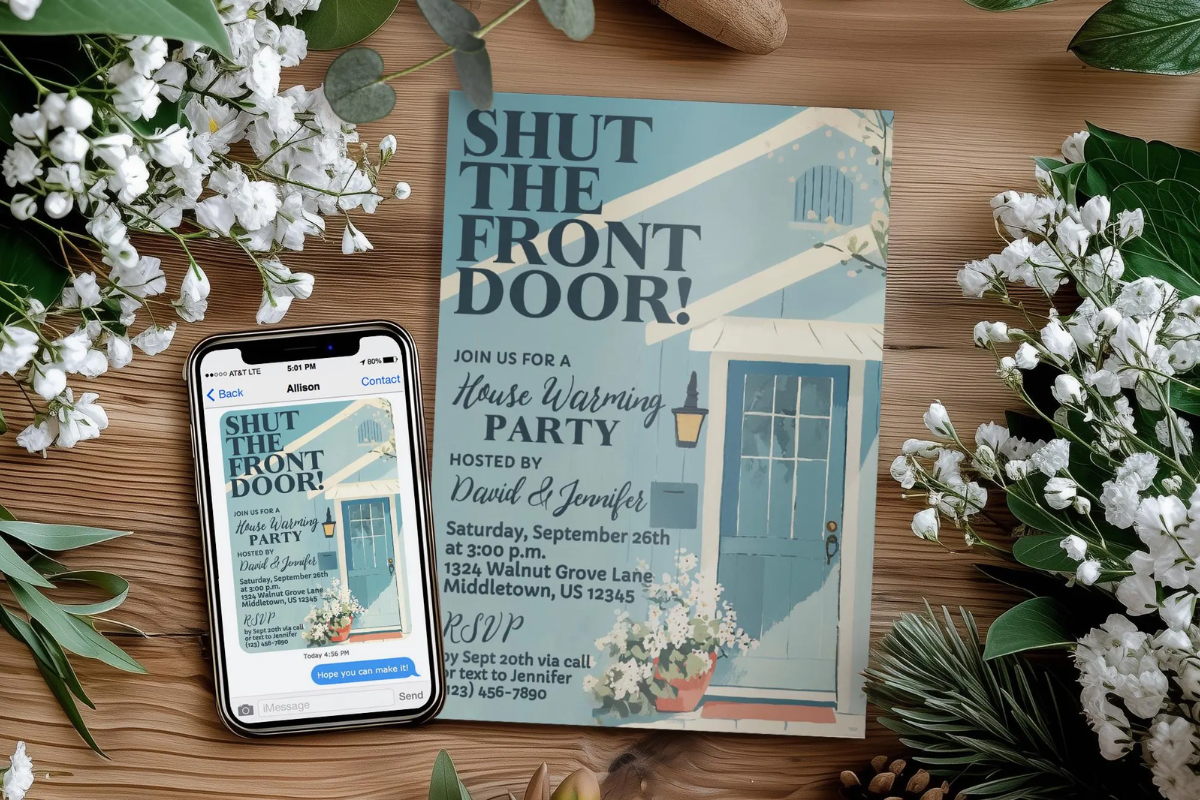
How to Send Invitations (and Actually Get Them to People)
Sending digital invitations has become the norm for many types of gatherings, but they also make it easier for your invites to get ignored. They might be marked as Spam or end up in a sea of marketing emails and get completely lost.
Printed invitations feel more intentional and are great for formal events, but they rely on having accurate mailing addresses and a little more effort on both sides. So where is the middle ground?
Here are a few things to consider:
- Double-check addresses before sending anything physical. People move more often than you think, and outdated addresses happen. Try reaching out to guests via text message, social media, or email to get their correct mailing address.
- Don’t rely on word of mouth or group chats as your only invite method. If it’s not written down somewhere clear, it’ll get lost.
- Use digital tools that allow guests to RSVP quickly and that let you track responses, especially for larger events.
For many hosts, a hybrid approach works well. A printed invitation sets the tone, and a digital version makes it easy to collect RSVPs and send reminders.
An invitation that gets lost, missed, or forgotten might as well not have been sent at all.
How to Get the RSVPs You Actually Need
This is where most hosts run into trouble.
You can send a beautiful, detailed invitation and still end up chasing people down for a headcount.
Here are our top tips for gathering RSVPs:
- Give a clear RSVP deadline, not an open-ended “let me know.”
- Make responding easy, whether that’s a quick click, a short form, a QR code, or a text.
- Be clear about why the RSVP matters, especially if you’re planning food, seating, or activities.
- Follow up as needed, ideally a few days before your deadline.
If you’ve ever planned an event, you know that no RSVP just creates more work later. A clear deadline and a quick follow-up can make all the difference.

Small Details That Make a Big Difference
Once the basics are covered, a few extra details can make your invitation much more helpful.
Consider including these details:
- Dress code guidance, even if it’s casual. Guests would rather know than guess.
- Plus-one expectations, especially if space or budget is a factor.
- Parking or arrival instructions, particularly for busy or unfamiliar locations.
- Weather backup plans for outdoor events.
These are the things guests often end up asking about anyway. Creating your own FAQ will save you from tons of texts or emails later on.
Conclusion
A great party invitation shares details and provides a little bit of crowd control before your event even starts.
When your invitation is clear, timely, and easy to respond to, guests know what to expect and how to show up. You spend less time answering questions, fewer things fall through the cracks, and the event itself runs more smoothly.
It’s a small step in the event planning process, but it has a bigger impact than you might realize.
Kadi McDonald is a freelance writer, marketing strategist, and proud Cleveland sports fan.